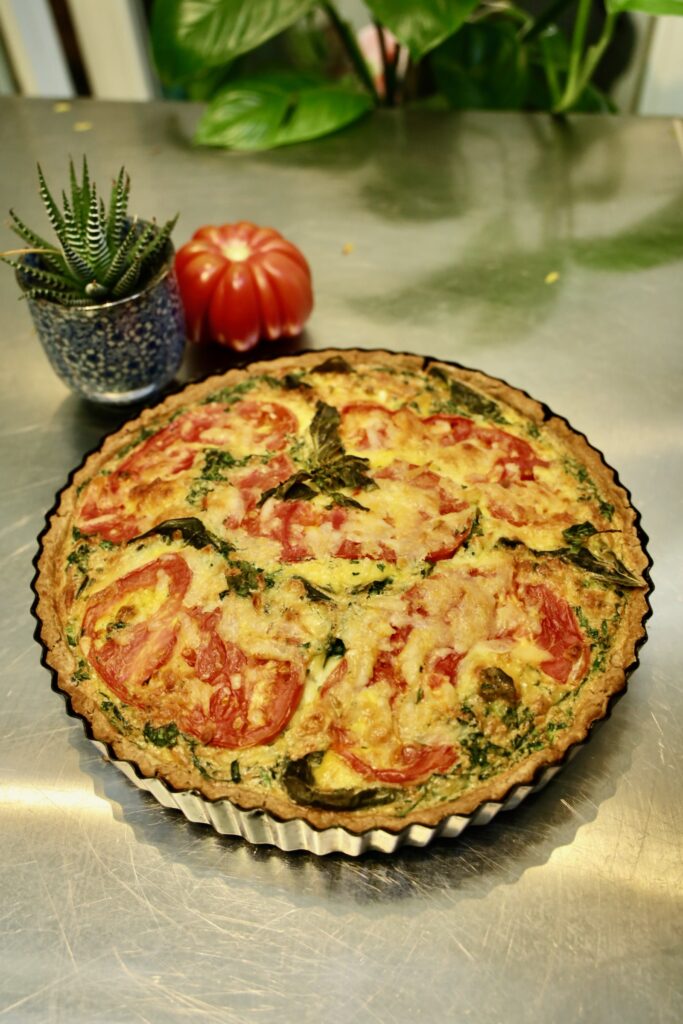

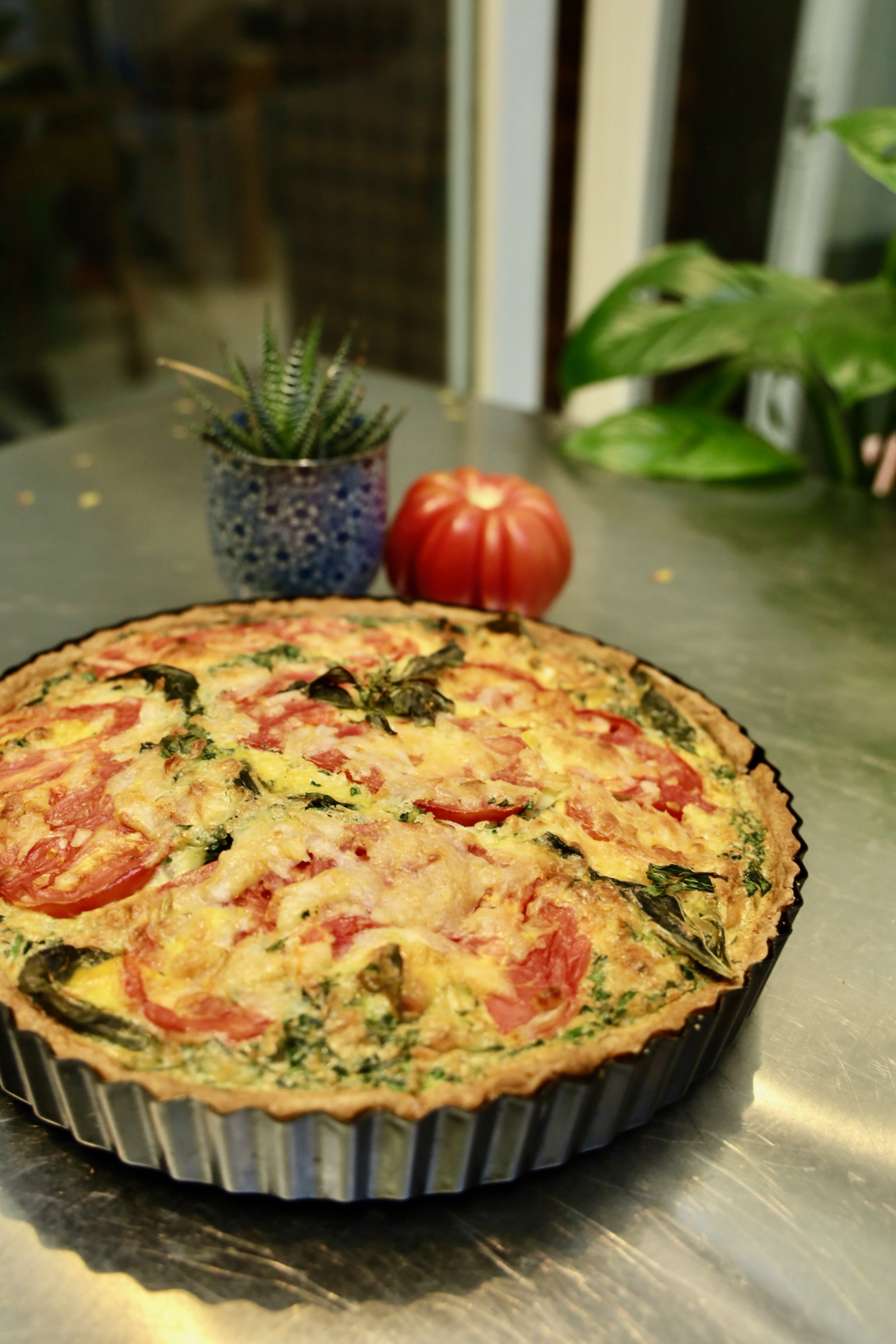
This high-iron quiche is packed with 11 eggs, making it the perfect high-protein meal. It also delivers a hefty dose of iron. These components, along with the savory manchego cheese (not all cheese is equal), make it an ideal food for women transitioning from their luteal phase to their menstrual phase. It provides the body with extra iron and nutrients needed to replenish the uterine lining and compensate for blood loss.
Women have significantly higher nutrient needs during this time—and, in many ways, throughout their lives—compared to men when considering their smaller size. We need to move away from the outdated idea that women are simple “little men” with proportionately lower nutrient requirements. Most studies lack female representation, and there is a severe lack of research addressing the specific nutritional demands of women during different hormonal phases. These phases, which involve substantial weekly changes, require distinct nutrient compositions to provide proper support.
In fact, a woman’s biological wiring shifts so dramatically week to week that it’s almost like being a different person. One week, you might feel outgoing, quick-witted, and full of energy. The next, you might struggle to walk two blocks or even multiple 7 times 4 likely because of the intense physiological disruption caused by hormone shifts. Add that to the reality of uterine shedding—chunks of tissue falling out between your legs, perhaps bleeding right through the new cup and pants you just put in/on—and it’s no wonder you feel drained. Graphic, yes, but this is the truth of menstruation. We need to consider how drastic these changes are and make more accommodations for women in a society that revolves on a 24 hr schedule, the schedule of high testosterone in the morning and less in the evenings—a 24-hr man hormonal cycle.
Men have the advantage of steady hormonal and physiological functioning throughout the month. Imagine always feeling how you do in your follicular phase: energetic, strong, able to lift double the weight you can manage during your luteal phase, and with a stable mood. Women’s hormonal and nutrient-driven physiological shits are profound and deserve far more attention in both research and practical nutritional advice. Nutritional science appears to base many recommendations on extrapolations, from data in the lab, or per unit of weight (usually a man’s weight), but this is a very reductionist viewpoint. This viewpoint is very reductionist. And although science in general terms to be reductionist, so that we flow from one small bit of information to grand extrapolations, we are discovering more and more that the body works in a holistic manner, and reductionist thinking, although linear and logical, is not how the body works. It is more probable that the body works on spirals.
Hormones drive these changes, and they are synthesized in the brain (particularly the limbic system), adrenal glands, ovaries, and other organs. Gut function, producing 80% of your neurotransmitters such as serotonin also affects hormone production. The organs that make your hormones rely on cells, which are powered by the mitochondria, the nucleus, the Golgi apparatus, and other organelles. All of these components require vitamins and minerals to function properly. The rapid changes in women’s systems suggest that their nutritional requirements—particularly for micronutrients—are higher than men’s on a per-pound (or per-kilogram) basis.
When I say that women’s nutrient needs are higher, I’m not referring to macronutrients like calories, fat, or protein. Men may have large macronutrient requirements due to their larger size; calories are required to maintain body mass at a steady state. However, I hypothesize that women’s needs for micronutrients are greater per pound of body weight than men’s. Additionally, I suspect that women’s caloric or macronutrient needs, such as for protein and fat, may be higher during certain times. For instance, there are days where I can thrive on minimal calories as long as they’re high quality—raw juices, Parmesan cheese, artichokes, and maybe an egg or gluten-free crepe. But there are other times when I’ll devour half a quiche like this one in an afternoon and still spend half the day in bed.
I’ve become acutely aware of these patterns after just two years of closely tracking my hormonal cycles. In the past, I thought, “I can do everything a man, can, and more,” pushing myself though court battles of full workdays while menstruating. Now, I intentionally rest during my period and late luteal phase. I’ve learned the hard way that trying to push through only leads to frustration. Writing during these phases, for example, results in disorganized, rambling, and disconnected work. Recognizing this has allowed me to adjust my workflow and honor my body’s needs. I encourage you to do the same, or to help the women in your life to do the same. Rest and operating in cycles for women is imperative for us to operate at optimal levels of health and functionality. For me, I stopped getting sick with month long colds, and 2 week viruses that used to plague me…about 2 months after I started making it a point to rest, not work on my period. I obtain from maximal housework, or perhaps I am proud if I just made dinner, washed the dishes, and washed 2 loads of laundry the entire day of my period heavy days…still too much, but progress from doing all that plus a work day.
Without further ado, here’s the recipe for this high-iron quiche. The spinach and basil are excellent sources of iron, and the vitamin C in the quiche helps convert ferric iron (Fe3+) into ferrous iron (Fe2+), the more bioavailable form. However, don’t discount the Fe3+ form—it can still be absorbed and stored by the body for later use. Interesting, the plant-based Fe3+form is less oxidative than the animal-based fe2+ form, which makes it less aging to the body. Oxidation is one of the primary culprits behind wrinkles, skin sagging, and general degeneration. So, don’t let anyone convince you that you need to eat meat for its “better-absorbed” iron. That same iron could be contributing to premature aging! For more scientific details regarding this, see the information after the recipe.
Hormones drive these changes, and they are synthesized in the gut, brain (particularly the limbic system), adrenal glands, and other organs. These organs rely on cells, which are powered by mitochondria, the nucleus, the Golgi apparatus, and other organelles. All of these components require vitamins and minerals to function properly. The rapid changes in women’s systems suggest that their nutritional requirements—particularly for micronutrients—are higher than men’s on a per-pound (or per-kilogram) basis.
Without further ado, here’s the recipe for this high-iron quiche. The spinach and basil are excellent sources of iron, and the vitamin C from the tomatoes in the quiche helps convert ferric iron (Fe3+) into ferrous iron (Fe2+), the more bioavailable form. However, don’t discount the Fe3+ form—it can still be absorbed and stored by the body for later use. Interestingly, the plant-based Fe3+ form is less oxidative than the animal-based Fe2+ form, which makes it less aging to the body. Oxidation is one of the primary culprits behind wrinkles, skin sagging, and general degeneration. So, don’t let anyone convince you that you need to eat meat for its “better-absorbed” iron. That same iron could be contributing to premature aging!
Hormones are synthesized in various parts of the body, such as the brain (particularly the limbic system), adrenal glands, ovaries, and other organs. While the gut doesn’t directly produce hormones like estrogen or progesterone, it plays a crucial role in regulating hormone levels and overall endocrine function. In fact, the gut is responsible for producing around 80% of the body’s serotonin, a key neurotransmitter that influences mood, digestion, and even hormone regulation. This connection, known as the gut-brain axis, highlights how gut health indirectly impacts hormonal balance and brain function.
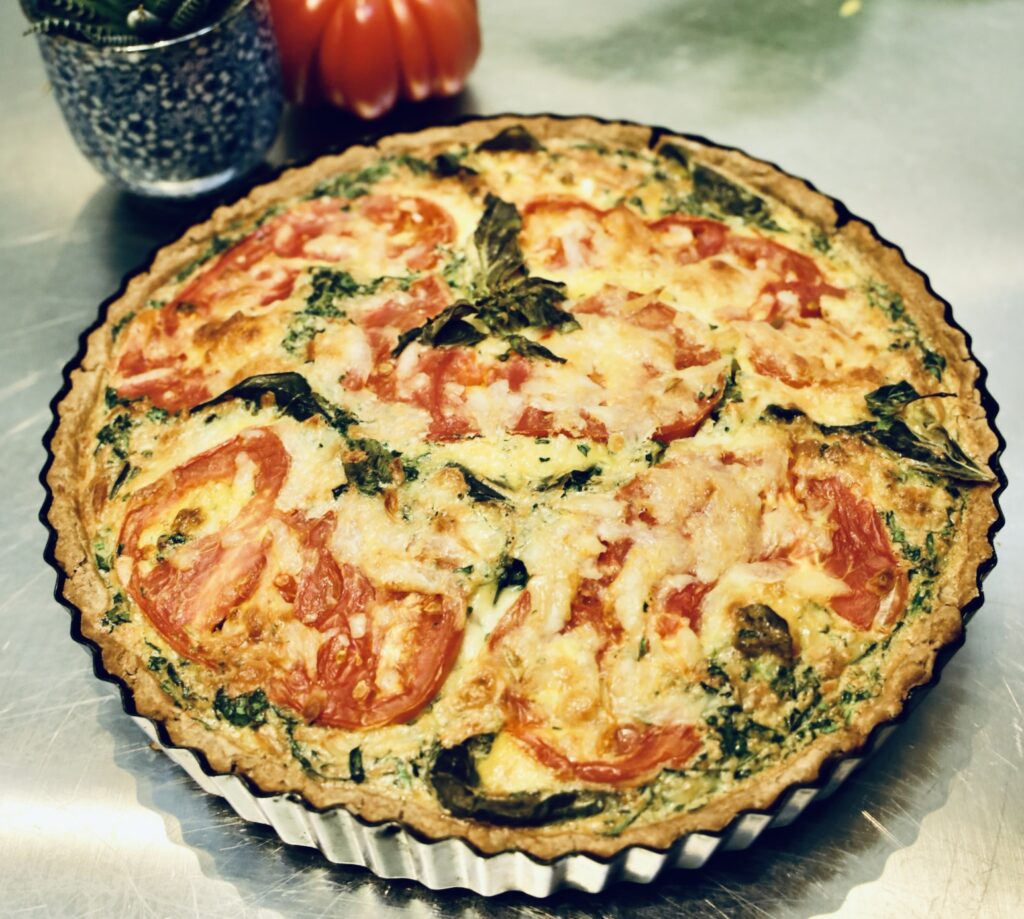
So, without further ado, I bring you this high iron quiche. The spinach and basil provide iron and the vitamin C in the quiche liberate the iron from it’s ferric, Fe3+ to Fe2+ form which is the form the body uses. But even though this increases absorption, remember the Fe3+ form can be absorbed as well and often is packaged in big storage balls to be used later by the body. The plant form Fe3+ of iron is less aging because it is less oxidative. Oxidation is one of the major causes of skin sagging, degneration, wrinkles, and aging in general of the body. So don’t let someone tell you you need to eat meat for the iron that is better absorbed, because this iron can also age you.
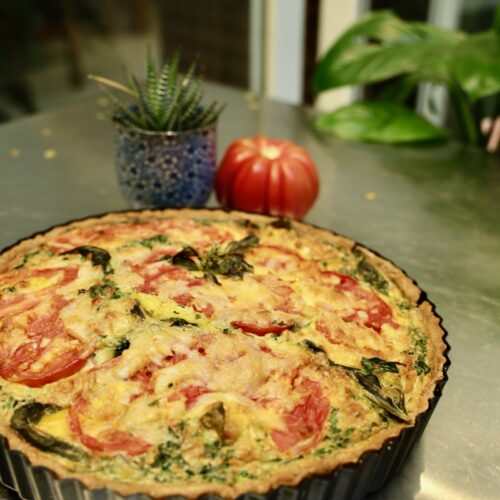
Tomato Basil High Protein Quiche
Equipment
- 1 pie or tart pan
- 1 electric mixer or food processor optional, to make pie crust
Ingredients
- 11 eggs divided
- 2 tbsp tapioca flour
- 1 tsp baking powder baking soda can be substituted
- 2 large green onions
- 1 1/2 cups manchego cheese parmesan or other hard sheep cheese are alternatives
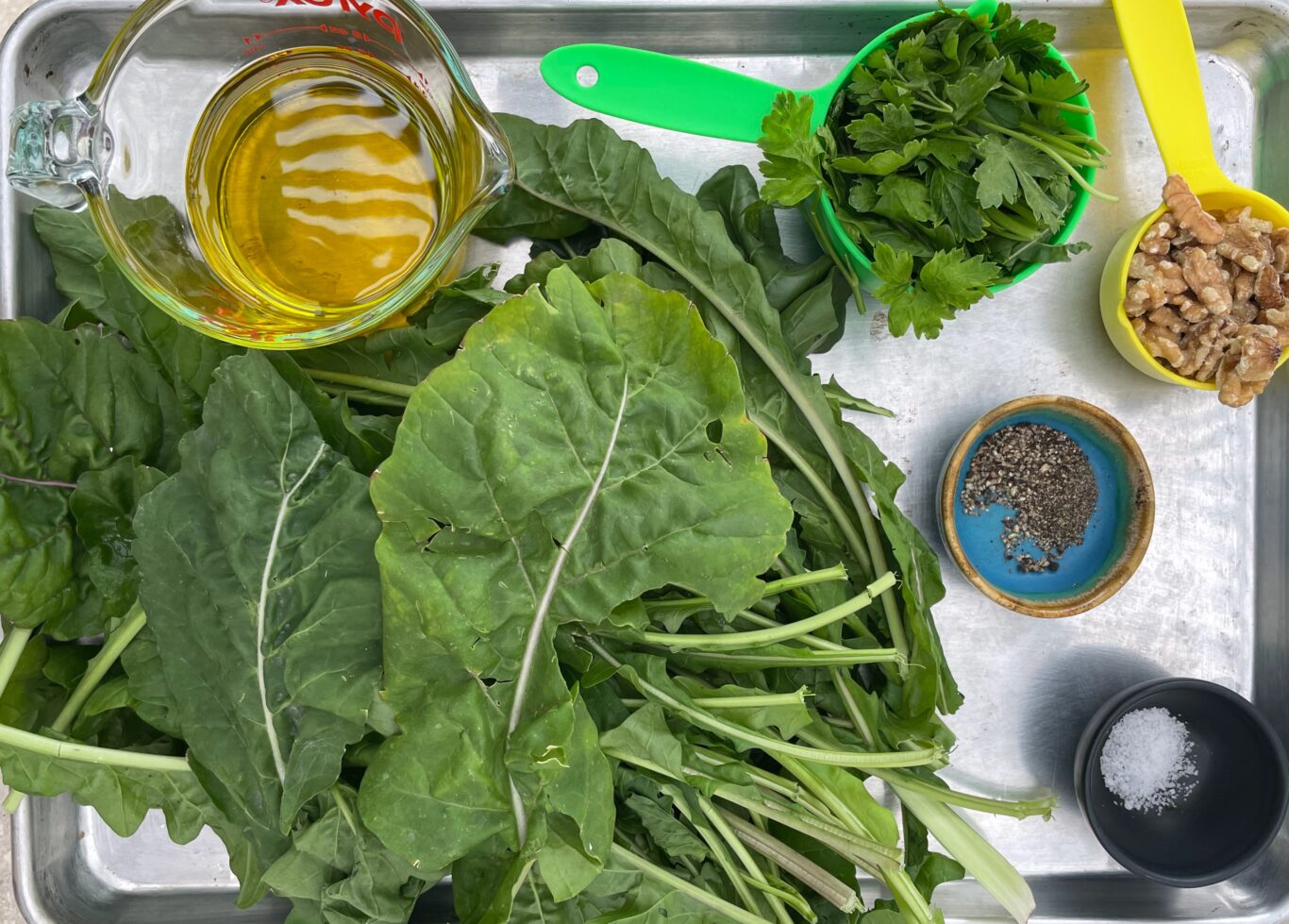
- 2 bunches spinach approx. 1 1/4 c finely minced, or chopped
- 1 large heirloom tomato or use 2 roma tomatos
- 3 sprigs fresh basil approx. 1/2 c of loose whole leaves
Instructions
- Make the crust if not already made (see recipe notes, or Gluten-Free Whole Grain Pie Crust)
- Pre-heat your oven to 400 degrees F or 200 degrees Celsius
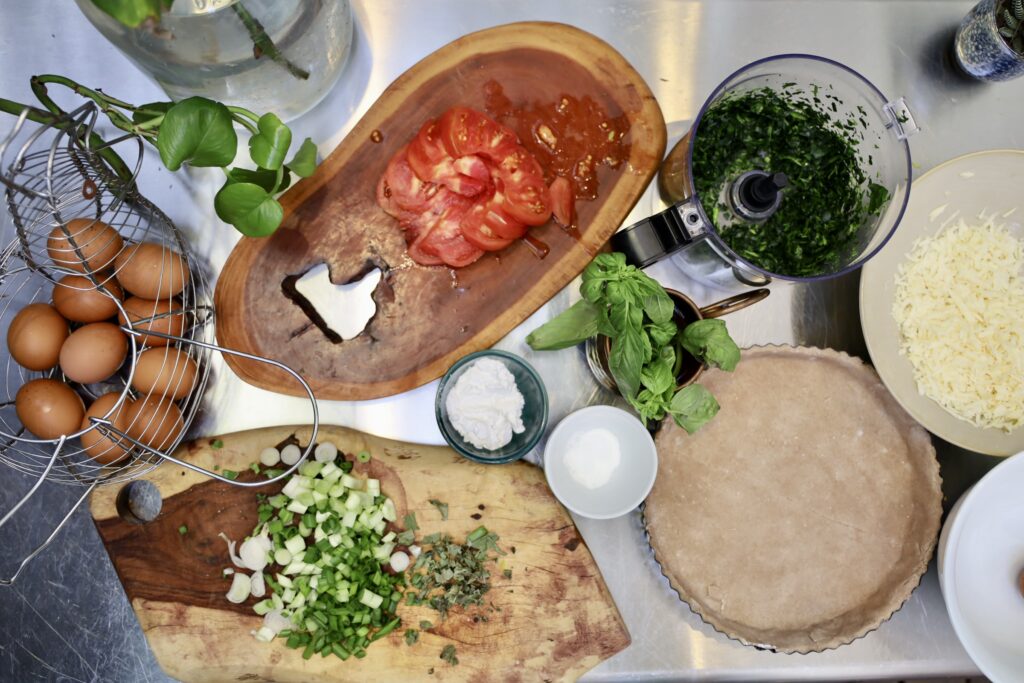
- Chop your green onions, slice your tomatoes, grate your cheese, and finely chop the spinach, preferably in a food processor
- Whip 6 eggs well then beat in the tapioca flour and baking powder
- Layer the green onions in the bottom of the crust
- Sprinkle 1/3 of the cheese mixture on top of the onions
- Combine the spinach with the egg mixture
- Pour the egg-spinach mixture on top of your green onions. Smooth evenly in the crust with a wooden spatula or spoon
- Sprinkle another 1/3 of the cheese
- Whip 5 more eggs up plain and pour as the next layer
- Cover the top with the basil leaves
- Layer the thick slices of tomato on top of the basil
- Sprinkle the rest of the cheese on top
- Push the tomatoes down into the egg so they are well nestled in the quiche
- Bake for 20 minutes, then turn your temperature down to 350 degrees F, or 180 degrees Celsius for the remaining time, until the quiche rises above the top of the pan, the crust pulls away from the side, and a knife inserted in the middle comes out without any runny egg, or about 15-25 more minutes, depending on your oven.
Notes
2-crust quiche crust
2 c gluten-free flour mix (use 1/2 c tapioca flour and any quantity of rice, garbanzo, or sorhgum flour, but be sure and use equal quantities of garbanzo as rice or sorghum, or the dough will have too much grain flour to hold together, it needs some bean flour, other bean flours can also work) 1 c tapioca flour 1 c teff flour 2/3 cold coconut oil 1/2 c water, or enough to bring crust together This makes two crusts, you can divide the recipe in half successfully, or fill the other crust with fruit to make an easy free form galette, such as a Strawberry-Blueberry Galette. Simply put some sugar with fruit and a dash of tapioca flour and fold into the other half of the crust).How Does Oxidative Stress Contribute to Aging?
Aging and Oxidative Stress:
Your connection between oxidative stress and aging is also well-supported. Telomere shortening and damage to DNA expression are key mechanisms of aging:
- Telomeres: These protective caps on chromosomes shorten with each cell division. Oxidative damage accelerates telomere shortening, leading to cellular senescence and aging.
- DNA damage: Reactive species (like hydroxyl radicals) can damage DNA. If repair mechanisms fail and the damaged cell doesn’t die, mutated DNA is replicated, potentially leading to dysfunctional proteins or even cancerous growths.
Oxidative stress is a major contributor to aging, driven by reactive species that damage DNA, proteins, and other cellular structures. Fe2+ (ferrous iron), the form found in meat, is more reactive due to its valence state and can participate in Fenton reactions, generating free radicals that accelerate oxidative damage. While Fe3+ (ferric iron), found in plant-based sources, is less readily absorbed, it’s also less reactive, potentially reducing the oxidative burden. This difference may help explain why diets high in plant-based iron are less associated with oxidative stress and aging. Aging itself is closely tied to telomere shortening and damage to genetic material—once DNA in a cell is damaged and not repaired or the cell doesn’t die, this damage can propagate, compounding cellular dysfunction.
How Does Iron Contribute to Oxidative Stress?
The body has a delicate system for managing iron intake, storage, and usage, but excess iron—especially in its reactive Fe2+ (ferrous) form—can cause oxidative stress. The Fenton reaction, triggered by unbound Fe2+, generates damaging free radicals that harm cells and tissues. This risk is heightened when large amounts of easily absorbed Fe2+ iron (such as from meat) are consumed over consecutive days, exceeding the body’s immediate needs.
To prevent this, the body stores iron primarily in the form of Fe3+ (ferric iron) bound to ferritin, a protein that safely sequesters iron in the liver, spleen, and bone marrow. This stored iron can later be liberated and reduced to Fe2+ when the body requires it, such as for hemoglobin synthesis. In contrast, plant-based Fe3+ iron is less readily absorbed, reducing the risk of oxidative damage from unbound iron. While this lower bioavailability is sometimes seen as a drawback, it also means that plant-based iron sources are less likely to overwhelm the body’s storage capacity, making them a gentler option for maintaining long-term iron balance.”
Unbound Iron and Oxidative Damage
- Excess iron, particularly unbound Fe2+, can be dangerous because it can catalyze the Fenton reaction, producing highly reactive hydroxyl radicals. If the iron is absorbed in amounts exceeding immediate physiological needs (e.g., after consuming a high-meat diet over several days), this surplus could lead to oxidative damage to cells and tissues.
- Iron overload, particularly in individuals with conditions like hemochromatosis, exacerbates oxidative stress and increases risks for chronic conditions (e.g., cardiovascular disease, liver damage).
2. Storage of Iron (Ferritin and Fe3+)
- The body primarily stores excess iron in ferritin, a protein that safely binds and sequesters iron in its Fe3+ (ferric) state. Ferritin is found in the liver, spleen, and bone marrow, acting as a reservoir that can be accessed when the body needs more iron. This stored Fe3+ can be reduced to Fe2+ and released when necessary for processes like hemoglobin synthesis.
- Plant-based iron (Fe3+) is generally less absorbed by the gut compared to Fe2+ from animal sources, which is a key distinction in bioavailability. However, this also makes Fe3+ less likely to cause oxidative stress because less unbound iron enters circulation directly after a plant-based meal.
- It’s also worth noting that hepcidin, a liver-produced hormone, regulates iron absorption. When iron levels are sufficient or excessive, hepcidin decreases intestinal iron uptake, which can help reduce oxidative stress. However, this system isn’t perfect and can be overwhelmed by very high dietary iron intake.
3. Balance and Utilization
- While ferritin offers a safe storage form for Fe3+, it has limits. When ferritin stores are saturated, excess iron can accumulate in organs in an unbound form, increasing oxidative stress. This can happen with chronic overconsumption of iron-rich foods or supplementation without medical necessity.
- Fe3+ is a safer form for storage—the body is better equipped to handle surplus ferric iron via ferritin sequestration than unbound ferrous iron in circulation.